Comparative Politics

Lecture 13: Corruption, Clientelism, and Accountability

Bogdan G. Popescu

John Cabot University

I. The Puzzle

Two Countries, One Starting Point

  • 1960s: Both deeply clientelistic
  • Philippines was richer per capita
  • Both US-aligned Cold War allies
  • Both ran on patronage networks
  • By 2000: radically different outcomes

Seoul today. Source: Wikimedia Commons.

The Divergence
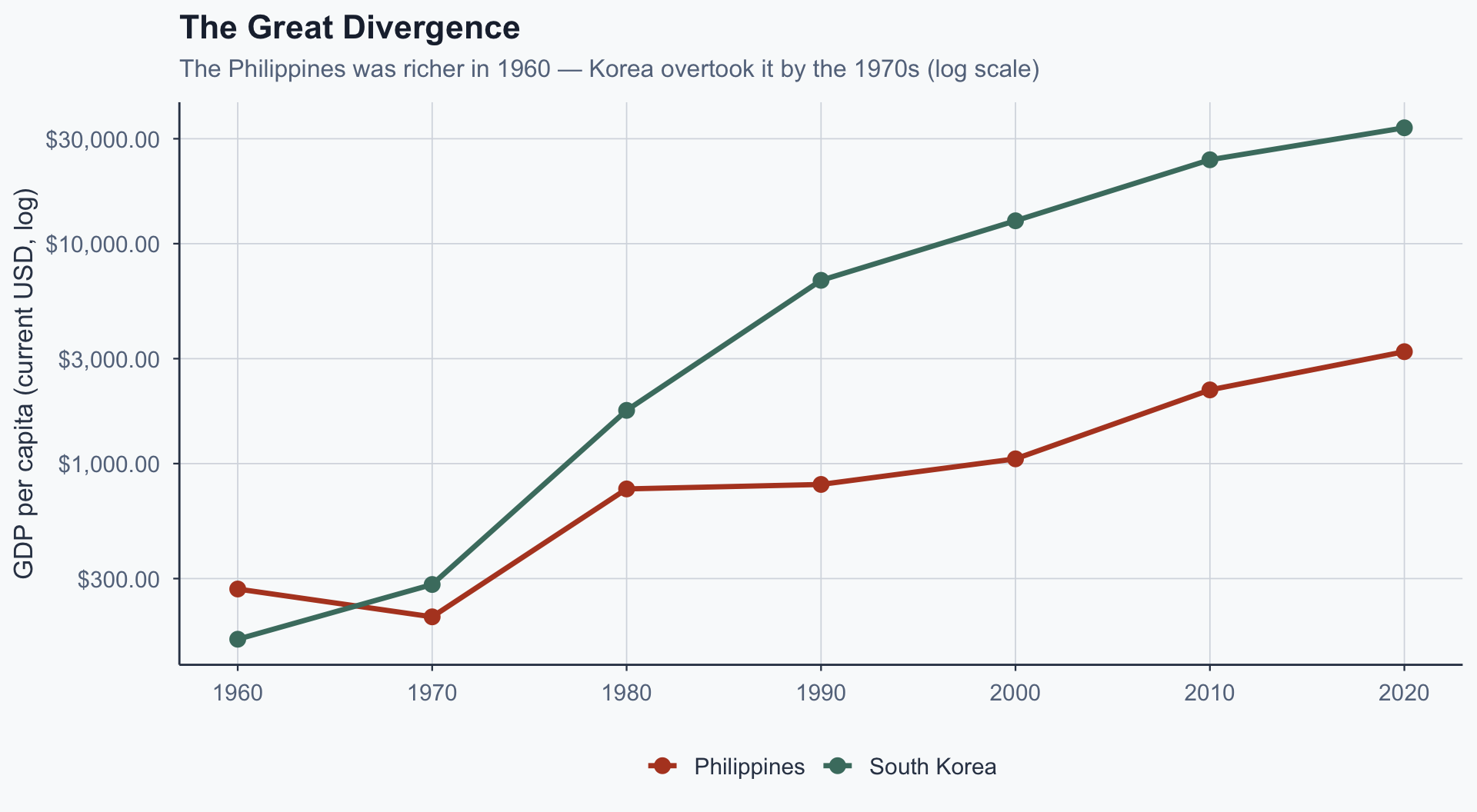
Figure 1: GDP per capita divergence. Source: World Bank (2023).

What Explains the Gap?

  • Not geography — both Pacific-facing
  • Not colonial legacy alone
  • Key: one broke the loop; one deepened it
  • Park insulated technocratic agencies
  • Marcos entrenched patronage oligarchy

The Lecture Question

  • What is clientelism, and why persist?
  • How does it trap states?
  • When and how do countries escape?

Manila, Philippines. Source: Wikimedia Commons.

II. Conceptual Foundations

Three Concepts, Often Conflated

Source: Adapted from Kitschelt & Wilkinson (2007).
Concept Definition Key feature
Corruption Abuse of office for private gain A transaction
Clientelism Benefits exchanged for political support A relationship
Patronage Discretionary allocation of public jobs An organizational resource

Why the Distinctions Matter

  • Corruption is one-off; clientelism is ongoing
  • Clientelism involves obligation and monitoring
  • Patronage is supply infrastructure for clientelism
  • Bribe is impersonal; patron-client tie is social
  • Conflating them leads to wrong prescriptions

Clientelism as a Relationship

%%{init: {'theme': 'base', 'themeVariables': {'fontSize': '20px', 'primaryColor': '#ffffff', 'primaryTextColor': '#1e293b', 'lineColor': '#334155', 'primaryBorderColor': '#334155'}, 'flowchart': {'useMaxWidth': true, 'nodeSpacing': 50, 'rankSpacing': 70}}}%%
flowchart LR
    A["<b>Patron</b><br/>Controls resources"] ---|"Material benefits<br/>(jobs, transfers, access)"| B["<b>Client</b><br/>Needs goods/services"]
    B ---|"Political support<br/>(votes, loyalty, turnout)"| A
    C["<b>Broker</b><br/>Monitors & enforces"] --- A
    C --- B
    style A fill:#ffffff,stroke:#4a7c6f,stroke-width:2px
    style B fill:#ffffff,stroke:#334155,stroke-width:2px
    style C fill:#ffffff,stroke:#64748b,stroke-width:2px

Source: Author’s illustration based on Scott (1972).

What Makes It Sticky?

  • Asymmetric power: patron controls access
  • Social embeddedness: ties are personal
  • Iterative exchange: repeated interaction builds norms
  • Monitoring: brokers track compliance locally

III. Why Does Clientelism Persist?

The Demand Side

  • Poor voters prefer certain small transfers now
  • Programmatic promises are uncertain, delayed
  • Clientelism provides insurance (Stokes, 2005)
  • Income volatility makes bird-in-hand rational
  • Not ignorance — rational risk management

The Supply Side

  • Parties with weak programmatic credibility
  • Strong local networks but no policy brand
  • Targeted benefits solve mobilization problem
  • Cheaper than programmatic infrastructure
  • Equilibrium serves both parties and voters

The Clientelistic Equilibrium

%%{init: {'theme': 'base', 'themeVariables': {'fontSize': '20px', 'primaryColor': '#4a7c6f', 'primaryTextColor': '#1e293b', 'lineColor': '#334155', 'primaryBorderColor': '#334155'}, 'flowchart': {'useMaxWidth': true, 'nodeSpacing': 50, 'rankSpacing': 70}}}%%
flowchart LR
    A["<b>Poverty &<br/>income volatility</b>"] --> B["<b>Voters prefer<br/>certain transfers</b>"]
    B --> C["<b>Parties invest in<br/>targeted delivery</b>"]
    C --> D["<b>No programmatic<br/>infrastructure built</b>"]
    D --> A
    style A fill:#fbe9e7,stroke:#b44527,stroke-width:2px
    style B fill:#fff3e0,stroke:#b7943a,stroke-width:2px
    style C fill:#fff3e0,stroke:#b7943a,stroke-width:2px
    style D fill:#fbe9e7,stroke:#b44527,stroke-width:2px

Source: Author’s illustration based on Stokes (2005).

The Enforcement Problem

  • Secret ballot means can’t verify votes
  • So how does vote-buying work?
  • Nichter (2008): key distinction
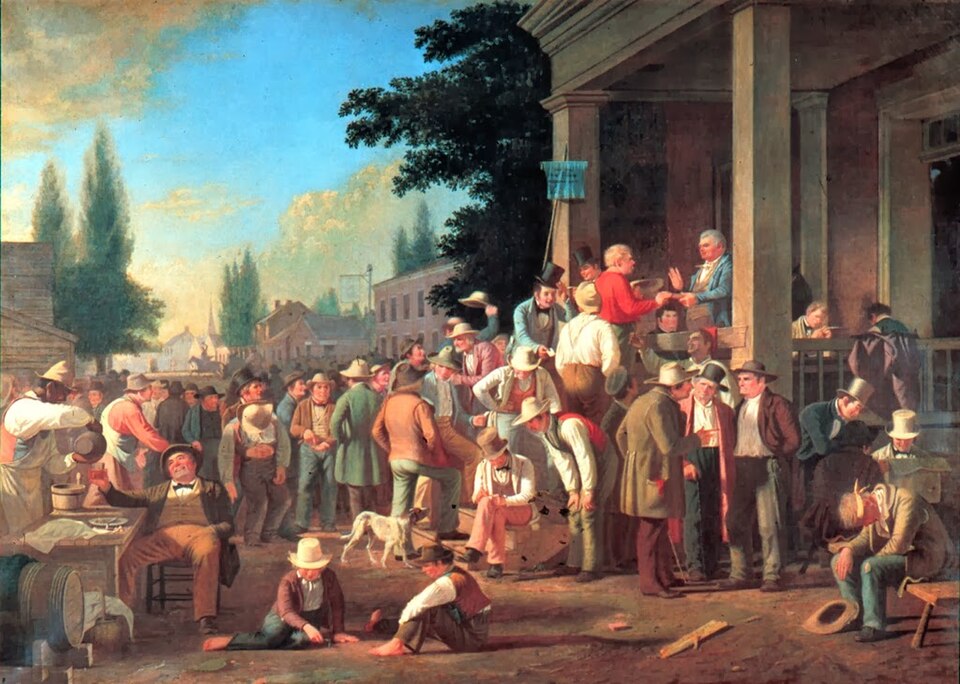
  • Not vote-buying but turnout-buying
  • Pay supporters to show up

G. C. Bingham, The County Election (1852). Source: Wikimedia Commons.

Vote-Buying vs. Turnout-Buying

Source: Adapted from Nichter (2008).
Vote-buying Turnout-buying
Target Opponents / swing voters Own supporters
Goal Preference change Mobilization
Verification Very hard Easier (showed up?)
Defection risk High Low
Broker role Persuade Monitor attendance

Brokers as Enforcement Technology

  • Local brokers monitor neighborhoods
  • Track who attended rallies, who voted
  • Social pressure in small communities
  • Brokers are the infrastructure, not cash
  • Remove brokers and clientelism collapses

The Korea/Philippines Anchor

  • Marcos: turnout-buying via barangay captains
  • Local brokers monitored, rewarded, punished
  • Park: dismantled broker networks
  • Replaced with bureaucratic service delivery
  • Removed the enforcement infrastructure

Exercise 1

Demand or Supply? (5 min)

Two scenarios:

  • Country A: Universal cash transfer ($50/month). Clientelistic party loses 15% vote share.
  • Country B: Same program via local party offices. Party vote share increases.

Which is demand-side disruption vs. supply-side capture? Where is the binding constraint?

IV. Measurement

The Fundamental Problem

  • Corruption is hidden by definition
  • Participants actively conceal it
  • Must infer from indirect evidence
  • Three approaches, each with limitations

Approach 1: Surveys

  • Afrobarometer, LAPOP: “Were you bribed?”
  • Captures reported experience
  • Problem: social desirability bias
  • Thresholds vary across cultures
  • Useful for patterns, not precise estimates

Approach 2: Perception Indices

  • TI Corruption Perceptions Index
  • World Bank WGI
  • Aggregated expert/business surveys
  • Measure reputation, not corruption
  • Treat as noisy signal

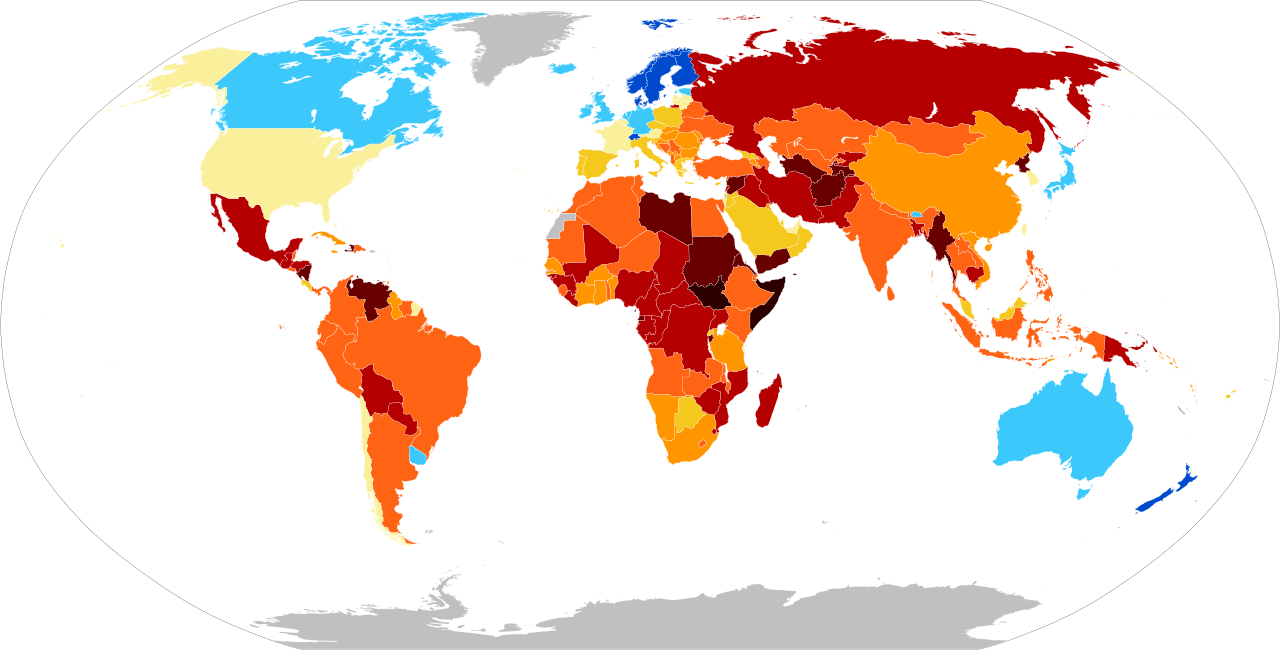
Clean (80+) 60–79 40–59 20–39 Corrupt (0–19)
Source: Transparency International via Wikimedia Commons.

Corruption Perceptions Index, 2023
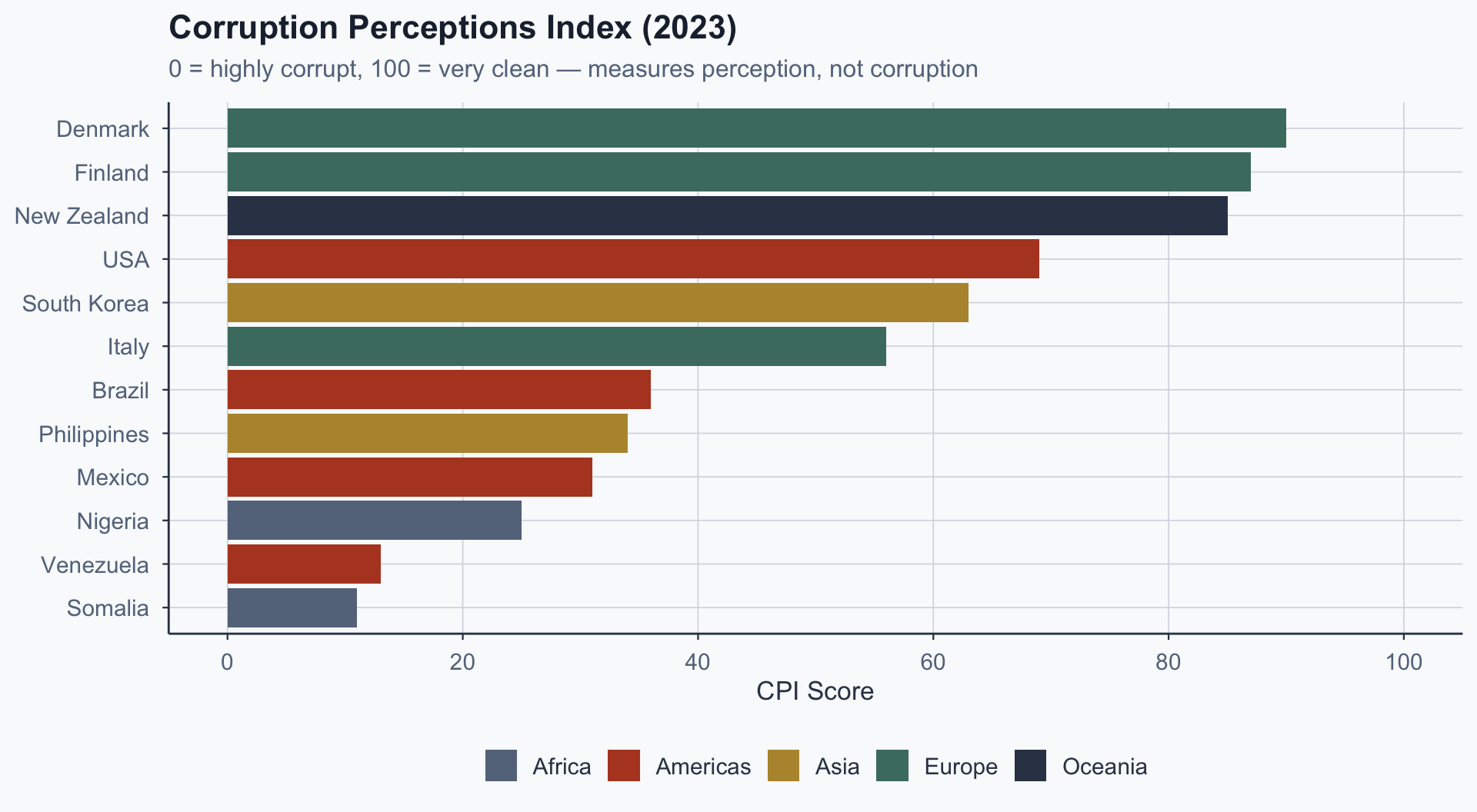
Figure 2: CPI scores for selected countries. Source: Transparency International (2023).

What the CPI Cannot Tell You

  • Cannot distinguish corruption types
  • Conflates petty and grand corruption
  • Expert perceptions lag actual reform
  • Rich countries: corruption may be legal (lobbying)
  • Use with caution as dependent variable

Approach 3: Behavioral Audits

  • Ferraz & Finan (2008): Brazil’s audit lottery
  • Random municipalities selected for audit
  • Quasi-experimental design
  • Audited mayors punished at ballot box
  • Clean identification of accountability

Ferraz & Finan: The Design

%%{init: {'theme': 'base', 'themeVariables': {'fontSize': '20px', 'primaryColor': '#4a7c6f', 'primaryTextColor': '#1e293b', 'lineColor': '#334155', 'primaryBorderColor': '#334155'}, 'flowchart': {'useMaxWidth': true, 'nodeSpacing': 50, 'rankSpacing': 70}}}%%
flowchart LR
    A["<b>Random audit<br/>lottery</b>"] --> B["<b>Some municipalities<br/>audited</b>"]
    B --> C["<b>Corruption<br/>revealed</b>"]
    C --> D["<b>Information<br/>disseminated</b>"]
    D --> E["<b>Voters punish<br/>corrupt mayors</b>"]
    style A fill:#e8f5e9,stroke:#4a7c6f,stroke-width:2px
    style B fill:#e8f5e9,stroke:#4a7c6f,stroke-width:2px
    style C fill:#fbe9e7,stroke:#b44527,stroke-width:2px
    style D fill:#fff3e0,stroke:#b7943a,stroke-width:2px
    style E fill:#e8f5e9,stroke:#4a7c6f,stroke-width:2px

Source: Author’s illustration based on Ferraz & Finan (2008).

The Key Finding

  • Disclosed corruption led to a drop in incumbent’s likelihood of re-election by approximately 20 percent
  • Effect strongest with local media coverage
  • Without information, no electoral punishment
  • Accountability = information + elections
  • Corruption is punishable — if voters know

V. The Low-Capacity Trap

The Core Logic

  • Weak states can’t deliver goods impersonally
  • Citizens turn to patrons for access
  • Patrons resist bureaucratic reform
  • Clientelism undermines state capacity further
  • Mutual reinforcement creates stable trap

The Low-Capacity Trap

%%{init: {'theme': 'base', 'themeVariables': {'fontSize': '20px', 'primaryColor': '#4a7c6f', 'primaryTextColor': '#1e293b', 'lineColor': '#334155', 'primaryBorderColor': '#334155'}, 'flowchart': {'useMaxWidth': true, 'nodeSpacing': 50, 'rankSpacing': 70}}}%%
flowchart LR
    A["<b>Weak state<br/>capacity</b>"] --> B["<b>Citizens rely<br/>on patrons</b>"]
    B --> C["<b>Patrons gain<br/>political power</b>"]
    C --> D["<b>Patrons block<br/>bureaucratic reform</b>"]
    D --> A
    style A fill:#fbe9e7,stroke:#b44527,stroke-width:2px
    style B fill:#fff3e0,stroke:#b7943a,stroke-width:2px
    style C fill:#fff3e0,stroke:#b7943a,stroke-width:2px
    style D fill:#fbe9e7,stroke:#b44527,stroke-width:2px

Source: Author’s illustration.

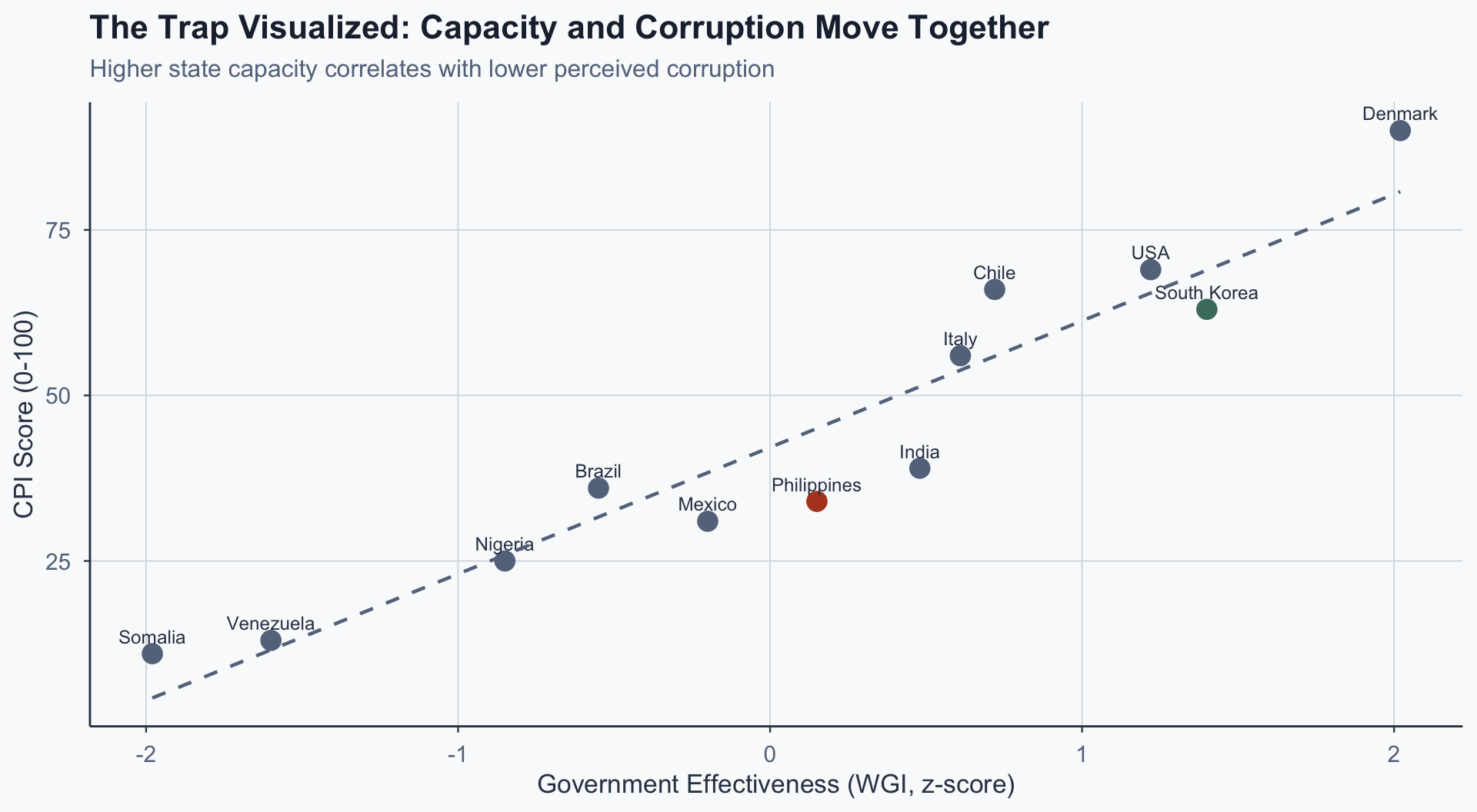
Government Effectiveness and CPI

Figure 3: State capacity and corruption perceptions. Source: World Bank WGI & TI (2023).

Korea: Breaking the Trap

  • Insulated Economic Planning Board
  • Merit-based technocrat recruitment
  • Cold War pressure for developmental results
  • Method was authoritarian repression, not reform
  • Raises question: can democracies replicate this?
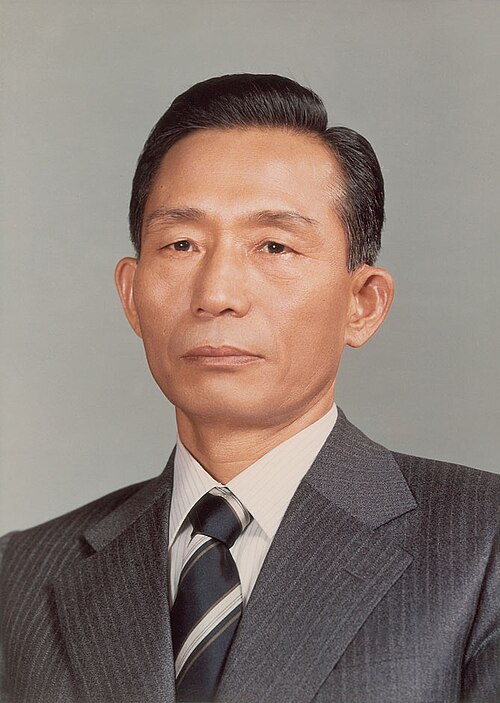
Park Chung-hee, President of South Korea (1963–1979). Source: Wikimedia Commons.

Philippines: Deepening the Trap

  • Had equivalent formal institutions
  • Chose not to insulate them
  • Patronage served regime survival
  • Barangay captains = electoral infrastructure
  • Oligarchic families captured local state
  • No external pressure to reform

Ferdinand Marcos, President of the Philippines (1965–1986). Source: Wikimedia Commons.

VI. When Do Systems Reform?

Three Exit Mechanisms

  • External shocks change elite incentives
    • Korea: US pressure, export competition
  • Competition makes programmatic policy credible
    • Argentina (Weitz-Shapiro, 2012)
  • Rising incomes erode the insurance logic

The Programmatic Turn

  • As incomes rise, voters need patrons less
  • Programmatic promises become more credible
  • Parties shift from targeted to universal goods
  • Kitschelt & Wilkinson (2007): broad cross-national pattern
  • But the transition is not automatic or linear

Why Reform Is Hard

  • Incumbents benefit from clientelistic system
  • They control the levers of reform
  • Collective action problem among reformers
  • Brokers resist merit-based recruitment
  • Trap is stable; escape requires disruption

Weitz-Shapiro: Competition as Catalyst

  • Argentine mayors in competitive districts
  • Shifted to programmatic delivery
  • Competition made clientelism costly
  • Programmatic commitment signals credibility
  • Competition can substitute for external shock

Exercise 2

Diagnosing the Trap (5 min)

Korea vs. Philippines comparison:

  • Structural factors (income, geography) or political agency (elite choices)?
  • Could Ferraz & Finan’s audit logic work under Marcos?
  • Name two missing preconditions
  • What does this reveal about institutional portability?

Conclusion

Conclusion

  • Clientelism is a rational equilibrium, not a moral failing
  • Brokers are the infrastructure; cash is secondary
  • Weak states and clientelism reinforce each other
  • The clearest historical exit was authoritarian
  • Democratic paths exist but are slow and fragile
  • Uncomfortable implication: the tools that break the trap fastest are the ones democracies cannot use

References

  • Calvo, E. & Murillo, M.V. (2004). Who delivers? Partisan clients in the Argentine electoral market. American Journal of Political Science, 48(4), 742-757.
  • Ferraz, C. & Finan, F. (2008). Exposing corrupt politicians: The effects of Brazil’s publicly released audits on electoral outcomes. Quarterly Journal of Economics, 123(2), 703-745.
  • Kitschelt, H. & Wilkinson, S.I. (2007). Patrons, Clients, and Policies: Patterns of Democratic Accountability and Political Competition. Cambridge: Cambridge University Press.
  • Nichter, S. (2008). Vote buying or turnout buying? Machine politics and the secret ballot. American Political Science Review, 102(1), 19-31.
  • Scott, J.C. (1972). Patron-client politics and political change in Southeast Asia. American Political Science Review, 66(1), 91-113.
  • Stokes, S.C. (2005). Perverse accountability: A formal model of machine politics with evidence from Argentina. American Political Science Review, 99(3), 315-325.
  • Weitz-Shapiro, R. (2012). What wins votes: Why some politicians opt out of clientelism. American Journal of Political Science, 56(3), 568-583.